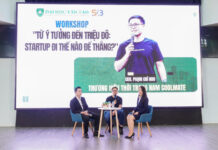
The talkshow “U.S. Clinical Internship & The Journey to Conquering the USMLE,” organized by the School of Medicine – Tan Tao University (TTU), provided students, physicians, parents, and other interested participants with practical insights into the United States Medical Licensing Examination (USMLE), clinical internship opportunities, medical research, and pathways toward residency training programs in the United States.
The program featured Prof. Dr. Thach Ngoc Nguyen – Vice President and Dean of the School of Medicine, Tan Tao University, together with TTU School of Medicine alumni who are currently studying and working in the United States:
- Dr. Vo Minh Viet – TTU School of Medicine Class I alumnus, currently a Resident Physician at Trinity Health Oakland / Wayne State University, USA.
- Dr. Tran Trong Nhan – TTU School of Medicine Class II alumnus, currently a Pediatrics Resident at the University of South Alabama, USA.
- Dr. Luong Ngoc Tuyet Nhi – TTU School of Medicine Class III alumna, currently a Resident Physician at Geisinger Health System, Janet Weis Children’s Hospital, Pennsylvania, USA.
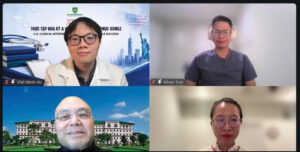
The program attracted strong interest from students of the TTU School of Medicine, medical students from other universities, physicians, and parents of Grade 12 students. It provided an opportunity for participants to hear firsthand stories, experiences, and perspectives from individuals who have made the journey from medical school in Vietnam to medical education and clinical practice in the United States.
FROM THE TTU CLASSROOM TO THE U.S. MEDICAL ENVIRONMENT
Opening the program, Prof. Dr. Thach Ngoc Nguyen shared insights into opportunities for international medical education, clinical training, and professional development.
Drawing on his extensive experience studying and working within the U.S. healthcare system, the Professor emphasized that Vietnamese students and physicians can confidently leverage their educational foundations when entering an international medical environment.
However, turning this goal into reality requires more than institutional support and guidance. Each student needs to take initiative, develop a personal plan, stay committed to academic excellence, and remain persistent throughout their chosen journey.
Key message: Confidence, initiative, and personal commitment play an important role in shaping the professional development of young physicians.
USMLE – START EARLY, STUDY STRATEGICALLY
One of the topics that received significant attention was preparation for the USMLE, the medical licensing examination system in the United States.
Drawing from his own experience, Dr. Vo Minh Viet shared practical approaches to studying, developing a preparation plan, and utilizing commonly used resources and tools, including:
- UWorld
- NBME
- AMBOSS
- Board and Beyond
- Anki
According to the speakers, preparing for the USMLE is not simply about memorizing knowledge. It also requires self-directed learning, consistent practice, clinical reasoning, and familiarity with the question formats and approaches used in the U.S. examination system.
Students also raised questions about the ideal time to begin preparing for the USMLE, particularly first-year students wondering whether they should start exploring USMLE materials alongside their medical curriculum in Vietnam or wait until the later years of medical school.
The discussion highlighted that early exposure to relevant knowledge and study methods can help students build a strong foundation and take greater ownership of their long-term plans. At the same time, preparation should be appropriately balanced with the core medical curriculum.
FROM STEP 1 TO THE JOURNEY TOWARD U.S. RESIDENCY
Continuing the program, Dr. Tran Trong Nhan – TTU School of Medicine Class II alumnus, currently a Pediatrics Resident at the University of South Alabama, USA – shared his personal journey toward residency training in the United States.
Through his own experience, Dr. Nhan provided participants with a more realistic perspective on preparing application documents, gaining clinical experience, and developing the key components of a competitive residency application over several years.
Beyond examination results, the speakers emphasized the importance of clinical experience, medical research, communication skills, teamwork, and an applicant’s personal story.
In a highly competitive environment, a strong application is built not only on academic achievements but also on well-rounded development and the applicant’s overall fit with the residency program.
U.S. CLINICAL INTERNSHIPS – AN OPPORTUNITY THAT REQUIRES EARLY PREPARATION
Alongside the USMLE and residency pathway, clinical internship opportunities in the United States were among the topics that generated lively discussion during the talkshow.
Participants asked about finding clinical internship programs, eligibility requirements, clinical experience, and the most appropriate time to participate.
The speakers emphasized that students should proactively research the requirements of each program and prepare their applications well in advance. For students studying in Vietnam, clinical internships in the United States should be carefully scheduled alongside their academic commitments.
Summer breaks may provide a suitable opportunity for students to gain international clinical exposure. Proactively researching programs, application requirements, and registration timelines can help students better prepare for their individual plans.
ADAPTING TO THE U.S. MEDICAL ENVIRONMENT: MORE THAN PROFESSIONAL KNOWLEDGE
With experience studying and working within the U.S. healthcare system, Dr. Luong Ngoc Tuyet Nhi – TTU School of Medicine Class III alumna, currently a Resident Physician at Geisinger Health System, Janet Weis Children’s Hospital, Pennsylvania – offered practical perspectives on adapting to the medical education and healthcare environment in the United States.
Among the challenges discussed were differences in healthcare system operations, electronic medical records, and collaborative models of patient care.
In particular, English communication skills were highlighted as essential for physicians working in an international environment. Communication is important not only for academic learning but also for effective collaboration with colleagues, gathering patient information, and building relationships with patients and their families.
In Pediatrics, this becomes even more important, as physicians must communicate effectively not only with children but also with their parents or caregivers.
OPPORTUNITIES FOR INTERNATIONAL MEDICAL GRADUATES AND PATHWAYS AFTER ECFMG
Another topic that attracted considerable attention was the opportunities available to international medical graduates (IMGs) seeking medical training and career opportunities in the United States.
Participants asked about residency opportunities across different specialties, the level of competition, the role of Step 2 scores, and factors beyond examination results that may influence an application.
Dr. Vo Minh Viet also shared information related to ECFMG certification and medical licensing policies in certain U.S. states, providing participants with a broader perspective on potential career pathways that international physicians may explore in the future.
Through these discussions, participants were encouraged to proactively stay updated on regulations, carefully review the specific requirements of each program and state, and develop a pathway based on their abilities, professional goals, and individual circumstances.
Q&A: REAL-WORLD QUESTIONS FROM PARTICIPANTS
The live Q&A session created an engaging and dynamic exchange, with questions from students of the TTU School of Medicine, medical students from other universities, physicians, and parents of Grade 12 students.
Questions focused on practical aspects of building an international medical career pathway, from USMLE preparation and clinical internships to medical research and residency applications.
Regarding the USMLE: Students asked about study resources, preparation tools, and strategies for developing an effective Step-by-Step study plan.
Regarding clinical internships: Participants asked how to find programs, eligibility requirements, and the appropriate timing for clinical rotations.
Regarding medical research: Students sought advice on accessing research opportunities and when to begin building research experience.
Regarding early preparation: First-year students were interested in how to balance the medical curriculum in Vietnam with long-term USMLE preparation.
Regarding U.S. residency: Participants asked about opportunities for international medical graduates, the role of Step 2 scores, and important components of a residency application.
Regarding career pathways: Participants explored potential options for international physicians after completing the necessary professional requirements and certifications.
EXPANDING HORIZONS AND TAKING CHARGE OF THE PROFESSIONAL JOURNEY
Closing the program, the speakers shared a common message: pursuing a medical career in the United States requires long-term preparation, strong knowledge, adaptability, communication skills, and perseverance.
For medical students, identifying their goals early can help them proactively balance their university curriculum with USMLE preparation, clinical experience, medical research, and the development of essential professional skills.
Most importantly, the journeys of TTU School of Medicine alumni who are currently studying and working in the United States demonstrate that this pathway can be built step by step, beginning while students are still in medical school.
The talkshow “U.S. Clinical Internship & The Journey to Conquering the USMLE” not only provided information about an international career pathway but also created an opportunity for participants to listen, learn, exchange, and connect with physicians who have experienced this journey firsthand.
The School of Medicine – Tan Tao University sincerely thanks Prof. Dr. Thach Ngoc Nguyen, Dr. Vo Minh Viet, Dr. Tran Trong Nhan, and Dr. Luong Ngoc Tuyet Nhi for sharing their knowledge, experiences, and personal journeys with the participants.
Through this program, TTU hopes to provide students with valuable insights and motivation to proactively plan their futures, continuously strengthen their professional capabilities, and confidently pursue opportunities for medical education, clinical practice, and career development in the global medical environment.