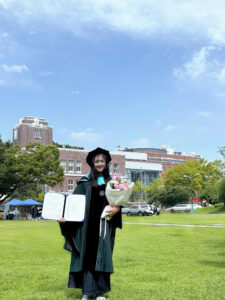


From the lecture halls of the Faculty of Biotechnology at Tan Tao University (TTU), Huynh Thi My Hanh has continued her academic journey in South Korea with a full scholarship under the IBCT Project. After two years of study and research at Chonnam National University, Hanh completed her Master of Science in Bioenergy Engineering with a perfect GPA of 4.5/4.5, while gradually establishing her research profile in biomass and enzyme technology.
FROM A TTU SCHOLARSHIP TO CHONNAM NATIONAL UNIVERSITY
Huynh Thi My Hanh’s journey in South Korea began with an opportunity that was opened to her while she was still a student at the Faculty of Biotechnology at Tan Tao University.
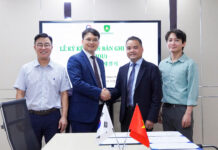
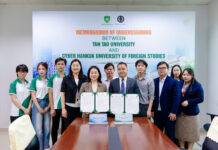
On August 14, 2024, TTU held a signing ceremony for contracts to send Biotechnology students abroad for postgraduate training under the IBCT Project. The ceremony was attended by Dr. Nguyen Mai Lam, Vice President of TTU; Dr. Nguyen Thanh Dien, Head of the Department of Science Management and International Cooperation; Dr. Ta Van Quang, Vice Dean of the Faculty of Biotechnology; along with staff and representatives from relevant university units.
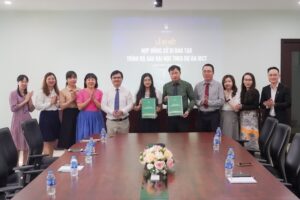
At the ceremony, Huynh Thi My Hanh, an alumna of TTU’s Faculty of Biotechnology, was selected to receive a full scholarship to pursue postgraduate studies at Chonnam National University, South Korea.
Through the IBCT Project, TTU provided a full scholarship covering tuition and related expenses, including living costs, airfare, and insurance. This support gave students the opportunity to focus on their studies, research, and professional development in an international academic environment.
For Hanh, the scholarship represented more than financial support. It was an opportunity to continue pursuing a field in which she had developed an academic foundation and received guidance during her years at TTU’s Faculty of Biotechnology.
From her undergraduate studies in Vietnam, Hanh continued her research journey at Chonnam National University, where she studied in the Department of Integrative Food, Bioscience, and Biotechnology, specializing in Bioenergy Engineering.
After two years of study and research, Hanh completed her Master of Science, marking a significant academic milestone in South Korea and further developing her research direction in biomass technology.
ADDRESSING AGRICULTURAL BYPRODUCT CONVERSION THROUGH ENZYME TECHNOLOGY
During her master’s program, Hanh focused on biomass and enzyme technology, particularly on improving the conversion of agricultural byproducts into higher-value products.
Her master’s thesis, “Engineering GH10 Xylanase-Expressing Trichoderma reesei for Enhanced Hydrolysis of Sugarcane Bagasse and Rice Husk: Functional Synergy with Pretreatment Severity,” focused on engineering Trichoderma reesei expressing GH10 xylanase to enhance the hydrolysis of sugarcane bagasse and rice husk.
The research addresses a highly practical challenge. Sugarcane bagasse, rice husk, and other agricultural byproducts are abundant sources of lignocellulosic biomass, yet converting them into valuable products remains challenging. Within the structure of lignocellulosic biomass, xylan, a component of hemicellulose, can hinder cellulase access to cellulose, thereby reducing hydrolysis efficiency.
In her study, Hanh used an extracellular enzyme cocktail from a recombinant Trichoderma reesei RUT C30 strain expressing Xyl10g, a GH10 xylanase derived from Gloeophyllum trabeum. The enzyme preparations were evaluated on sugarcane bagasse and rice husk under different pretreatment conditions and enzyme loadings.
The results showed that the effectiveness of Xyl10g varied depending on the type of biomass and the severity of pretreatment. The optimal enzyme loadings were identified at 10 FPU/g for sugarcane bagasse and 30 FPU/g for rice husk. These findings helped clarify the relationship between substrate characteristics, pretreatment severity, and enzyme activity during biomass saccharification.
A notable aspect of Hanh’s research is its practical orientation. Rather than focusing solely on enzyme characteristics in the laboratory, the study addresses a broader question: how can abundant agricultural byproducts be efficiently utilized to produce energy, chemicals, or higher-value bioproducts?
In addition to her master’s thesis, Hanh has actively participated in international research and academic activities. She is a co-author of the research article “Integrated Gelidium amansii biorefinery for selective HMF and green enzymatic FDCA production via ketohexose bias and engineered oxidase,” published in Environmental Technology & Innovation.
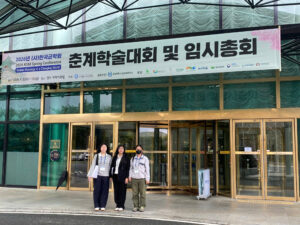
Hanh also attended BIOPLUS-INTERPHEX KOREA 2025. In April 2026, she participated in the Korean Society of Mycology as an oral presenter, presenting her research entitled “Enhanced Enzymatic Hydrolysis of Agricultural Residues by a GH10 Xylanase Supplemented – Trichoderma reesei Enzyme Cocktail under Different Pretreatment Severities.”
These academic and research activities demonstrate how the journey that began with a scholarship has gradually developed into a deeper research path, with the knowledge and foundation gained at TTU serving as a stepping stone for Hanh to enter the international scientific community.
BRINGING KNOWLEDGE BACK TO VIETNAM AND CREATING MEANINGFUL VALUE
From the outset, when the training program was established in 2024, the IBCT Project was designed not merely to send students abroad for further study, but also to provide them with access to advanced technologies, research methodologies, and international scientific environments, with the long-term goal of bringing their knowledge and experience back to contribute to Vietnam’s development.
At the signing ceremony, Dr. Nguyen Thanh Dien, Head of the Department of Science Management and International Cooperation at TTU, highlighted the expectation that students, after completing their training, could bring their technological expertise back to Vietnam, continue contributing to the Faculty of Biotechnology, and gradually lay the foundation for industrial-scale projects aimed at converting agricultural byproducts into economically valuable compounds.
This vision is closely aligned with the research path Hanh is pursuing. After completing her master’s degree, she plans to remain in South Korea for approximately one year to conduct further research and gain experience in the development and transfer of biomass processing technologies at the pilot scale. For Hanh, this will be an important step toward gaining a deeper understanding of how research findings can move beyond the laboratory and closer to real-world applications.
In the long term, Hanh hopes to bring the knowledge and experience she has gained back to Vietnam, a country with abundant agricultural biomass resources such as rice straw, rice husk, sugarcane bagasse, and other agricultural residues. She hopes to continue researching and developing solutions that can convert these resources into energy, chemicals, and valuable bioproducts, helping reduce waste while opening up more sustainable development opportunities.
From an opportunity first opened at TTU, Huynh Thi My Hanh has continued to build her journey through perseverance in learning, dedication to research, and a strong desire to turn knowledge into practical applications. For the Faculty of Biotechnology and Tan Tao University, Hanh’s journey is a source of pride and a meaningful reflection of the value of investing in students—not only by providing access to international education, but also by nurturing young people with professional expertise, research capabilities, and the aspiration to create meaningful value for their homeland.